

If you are a manager, product planner, or sales leader at an electric vehicle (EV) manufacturing company, you inevitably face the same critical question from every fleet operator, logistics manager, and private buyer: “What is the real-world range?”
Buyers have quickly realized that the advertised range on a glossy brochure rarely matches the harsh reality on Indian streets. For years, the industry has placed the blame almost entirely on the battery pack. However, a recent comprehensive study published in Scientific Reports (2025) shifts the focus to a much more critical component: how your electric motor interacts with the unique chaos of the Indian Drive Cycle (IDC).
Standardized global drive cycles, such as the Worldwide Harmonized Light Vehicles Test Procedure (WLTP) or the New European Driving Cycle (NEDC), fail to adequately represent the dynamic and stop-and-go nature of Indian traffic conditions. If your 3-wheeler (3W) cargo loader or 4-wheeler (4W) passenger EV features a generic, “one-size-fits-all” motor that isn’t optimized for local road realities, it is actively bleeding electrical efficiency and costing your customers money.
At Quanteon, we analyzed the crux of this data to perfect our modular motor technology. Here is what the science says about EV performance in India, and how you can use it to build and sell a superior, highly optimized vehicle.
1. The “Triple Threat” of Indian Roads: Understanding the IDC
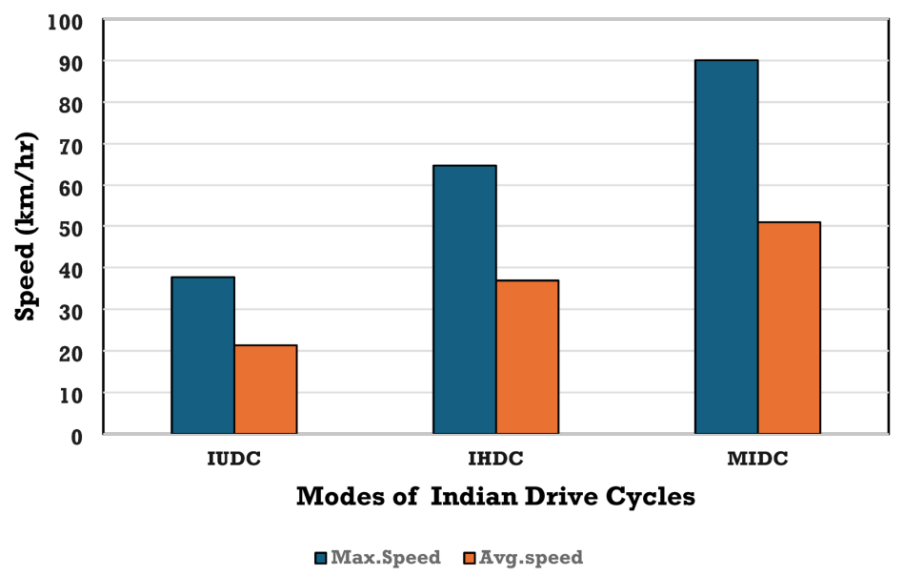
The research breaks down vehicle performance across three distinct Indian driving scenarios to accurately assess energy consumption. Understanding these profiles is the first step to optimizing your powertrain for the end-user:
- IUDC (Indian Urban Driving Cycle): This cycle mimics the heavily congested, stop-and-go traffic of Indian cities. It features a low average speed but demands constant starting and stopping. For 3W cargo loaders and e-rickshaws, this is exactly where your vehicles spend the vast majority of their operational lives.
- IHDC (Indian Highway Driving Cycle): Simulating highway traffic, this cycle features more stable driving patterns with significantly higher average and peak speeds. It requires the motor to maintain momentum against continuous aerodynamic drag.
- MIDC (Modified Indian Driving Cycle): This cycle represents a hybrid of urban transients and high-speed driving. It represents the ultimate stress test for modern 4W passenger EVs, forcing the powertrain to rapidly switch between high-torque demands and high-speed cruising.
2. The Powertrain Dilemma: High Torque vs. High Speed
The study reveals a vital engineering reality: Energy consumption is not a flat line. The electrical efficiency of an EV varies drastically depending on the driving environment.
Why does this happen? It comes down to the physical forces acting on the vehicle, such as rolling resistance, inertia, and aerodynamic drag, and how the motor responds to them.
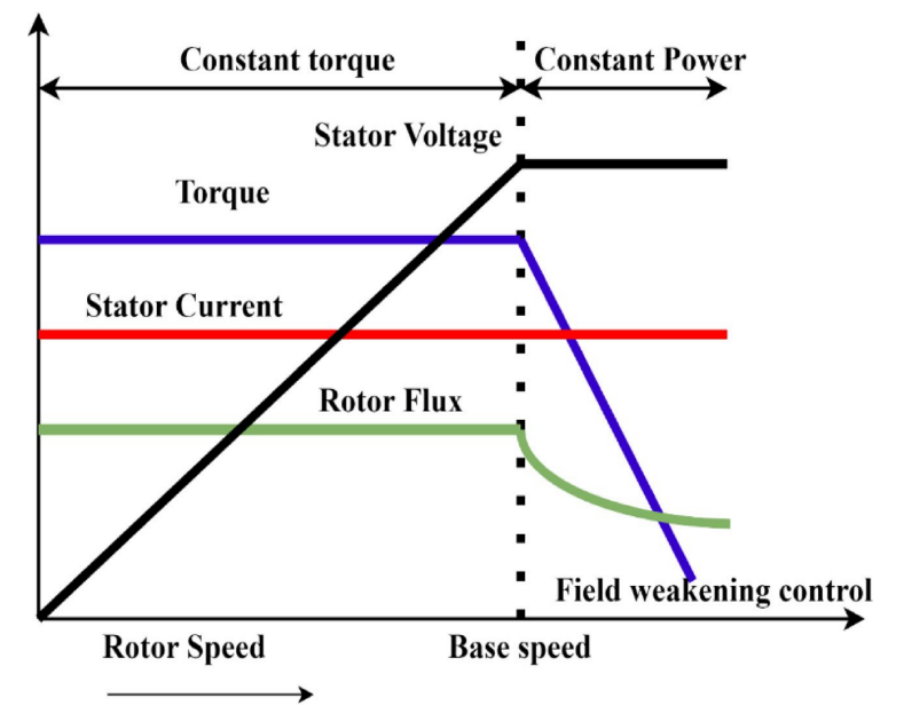
In the city (IUDC), the motor is forced to operate at lower rotational speeds while demanding exceptionally high, continuous torque to repeatedly overcome the vehicle’s inertia from a dead stop. Because of this frequent, aggressive acceleration and deceleration, the battery experiences heavy, fluctuating discharge currents.
Conversely, on the highway (IHDC or MIDC), the motor spins at blisteringly high speeds to maintain momentum, fighting immense aerodynamic drag and pulling higher, sustained energy loads.
If an OEM installs a high-speed highway motor into an urban 3W cargo vehicle, it will operate completely outside of its peak efficiency window. It will generate excess heat, struggle with start-up torque when fully loaded, and drain the battery prematurely.
3. Quanteon’s Solution: The Power of Modular Motor Design
This is exactly where legacy motor suppliers fall short. Offering a static, off-the-shelf motor for diverse Indian applications forces OEMs into a corner where they must compromise on either range, pulling power, or thermal safety.
At Quanteon, our core differentiator is our modular design approach. We empower 2W, 3W, and 4W manufacturers to completely align their powertrain with their exact customer requirements without having to redesign their entire chassis or sacrifice efficiency.
- Variable Length, Constant Efficiency: Instead of forcing you to choose between rigid, pre-set motor sizes, our architecture allows us to physically vary the length of our power-dense motors. We scale the active magnetic materials to give you the exact torque required for a heavy-duty urban cargo vehicle, or the high RPMs needed for a passenger vehicle, all while maintaining the optimal electrical efficiency band.
- Technology Agnostic for Maximum Flexibility: We don’t just push one single technology. Depending on your vehicle’s payload, chassis space, and budget, we offer highly efficient Permanent Magnet Synchronous Motors (PMSM) and rugged Induction Machines.
- Space-Saving Power Density for 3Ws: For 3W manufacturers where chassis space is at an absolute premium, our power-dense motors deliver unmatched torque in a radically compressed footprint. This topology provides massive low-end torque for heavy payloads while freeing up vital real estate for larger battery packs or increased cargo capacity.
Discover how our modular topology can perfectly fit your specific vehicle parameters by exploring our full lineup at Quanteon EV Motors (https://quanteonworld.com/product-category/ev/).
4. Beating the Thermal Bottleneck in Indian Summers
The Scientific Reports study also uncovered a hidden range-killer that fleet operators fear the most: thermal stress. Operating a vehicle across different drive cycles drastically impacts powertrain temperatures, which is a critical concern in the sweltering Indian climate.
The researchers noted that battery and motor temperatures escalate significantly when pushed from the slower urban cycle into the sustained power demands of highway driving. Elevated temperatures expedite the chemical processes inside the battery, which can result in the accelerated breakdown of internal components, a higher risk of thermal runaway, and diminished overall longevity.
Quanteon motors are engineered from the ground up with advanced thermal management in mind. By ensuring our modular motors operate in their highest efficiency band for their designated drive cycle, less electrical energy is wasted as heat. This inherently keeps the entire powertrain, from the inverter to the battery pack, cooler, safer, and far more reliable, drastically reducing warranty claims and maintenance downtime.
5. Empowering Your Sales Narrative
When your sales team sits down with a B2B fleet operator or a retail customer, the conversation needs to move beyond just raw battery capacity. The market is maturing, and buyers want to know how the vehicle uses its energy.
Imagine empowering your sales managers to say: “Our competitors use generic motors that waste your battery life in city traffic. Our vehicles are equipped with Quanteon powertrains, physically tailored and specifically optimized for the Indian Urban Drive Cycle. That is why our vehicles run cooler, last longer, and deliver the true pulling power and range we promise.”
Data-backed engineering translates directly into commercial trust. By acknowledging the unique driving patterns of the Indian consumer and sourcing a powertrain built specifically to conquer them, you position your brand as a market leader in reliability and Total Cost of Ownership (TCO).
Are you ready to stop losing EV range to inefficient, off-the-shelf drivetrains? Don’t let a generic motor bottleneck your vehicle’s true potential. Explore how our variable-length PMSM and Induction solutions can be customized for your exact platform